
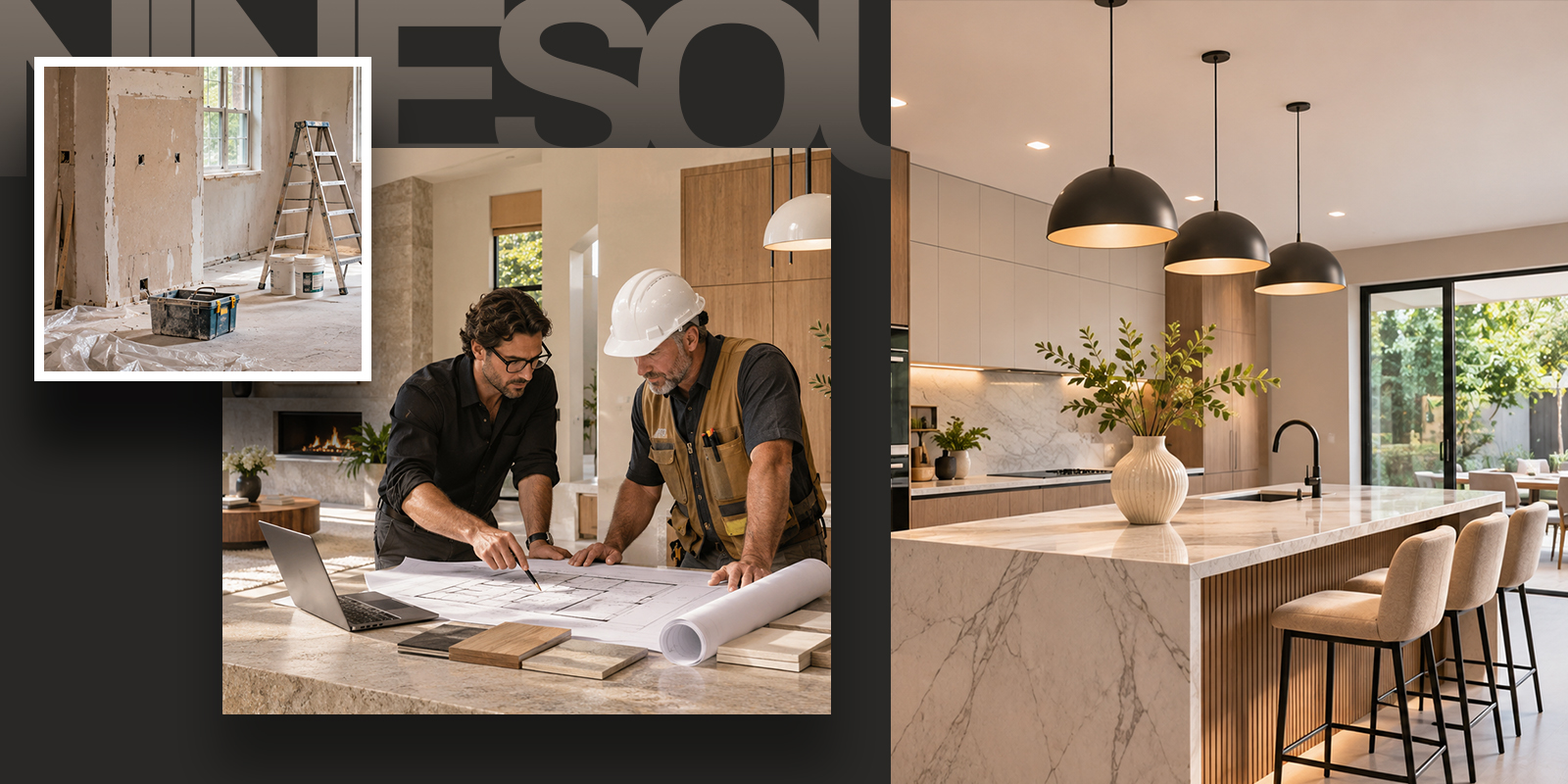
Most remodels start the same way. You're standing in your kitchen, or a bathroom, or a room that never quite worked, and you think: we should really do something about this. Then the questions pile up. What is home remodeling, exactly? What's the difference between remodeling and renovating? And who do you hire to do it?
This home remodeling guide answers those in plain English. First, what remodeling actually is. Then how to pick a contractor you won't regret.
What Is Home Remodeling?
Put simply, home remodeling means changing how a part of your house is built, laid out, or used. You're not just freshening it up. You're reshaping it. Moving a wall to open up a kitchen. Turning a spare room into a primary suite. Adding a second bathroom where there wasn't one.
Remodeling can be one room or the whole house. It can be mostly cosmetic, or it can involve structure, plumbing, and wiring. What ties it together is that the space ends up working differently than it did before.
What Does Remodeling Mean Compared to Renovating?
People use the two words interchangeably, and plenty of contractors do too. If you want a rule of thumb, here it is. Renovating usually means updating or restoring what's already there, like new paint, new floors, or replacing worn fixtures. So what does remodeling mean? It means changing the design or the layout itself. A renovation makes a room fresh. A remodel makes it different. Plenty of projects are a bit of both.
Remodeling, Repairs, and New Construction
A repair fixes something that's broken. A remodel changes something that works but doesn't suit you anymore. New home construction starts from an empty lot. If you love your location but not your house, remodeling is often the middle path. If the house would need so much change that you'd be rebuilding most of it, it's worth pricing out a new build too.
Common Types of Home Remodeling
Home remodeling services cover a lot of ground. Here are the projects you'll see most often:
- Kitchens: layouts, cabinets, counters, lighting, and appliances
- Bathrooms: anything from a small update to a full redesign
- A home interior remodel: reworking floors, walls, ceilings, and how rooms connect, in one room or across every floor
- Additions: more space, like a new bedroom, an office, or a second story
- Outdoor living: patios, terraces, and the connection between inside and out
- Whole-home projects: reworking most of the house at once
Not every company offers everything. Some handle design, permits, and construction. Others only build. Ask what's included before you sign anything.
Where Home Remodel Design Fits In
Before anyone swings a hammer, the project needs a plan. That's what home remodel design is: deciding how the space should work, how it should look, which materials to use, and how it all fits your budget. It usually means measuring the space, sketching ideas, choosing materials, and getting drawings ready for permits and pricing.
It's tempting to rush this part and get to the fun stuff. Don't. Skipping the design phase is one of the easiest ways to end up with surprises, change orders, and a bill that keeps growing.
How to Choose a Remodeling Contractor
This is the part that makes people nervous, and fair enough. You're letting someone into your home for weeks or months. Knowing how to choose a remodeling contractor mostly comes down to a handful of checks. They work the same way if you're wondering how to choose a contractor for renovations of any size.
1. Check the License and Insurance
Ask for the contractor's license number and look it up with your state's licensing board. In California, that's the Contractors State License Board. Also ask for proof of insurance. A good contractor won't mind.
2. Look at Real Past Projects
Photos are nice. Better is a project close to yours in size and style. Ask for references and call a couple of them. Ask how the process felt, not just how the result looked.
3. Get the Scope in Writing
A one-line quote isn't a plan. Ask for a written scope that lists what's included, which materials, what's allowed for things you haven't picked yet, the timeline, and how payments work. It should also say how changes get handled, because there will be some.
4. Compare Bids Carefully
If one bid is far lower than the others, find out why. It may be missing something. Compare what's actually included, not just the bottom line.
5. Ask How They Communicate
Who's your main contact? How often will you get updates? What happens if something comes up on site? Poor communication is a common complaint in remodeling, and you can usually get a sense of it before you hire anyone.
6. Find Out Who Does the Design
Some contractors design in-house. Others expect you to bring plans. Neither is wrong, but you should know which one you're signing up for.
7. Trust Your Gut
You'll be talking to this person a lot. If they listen, answer straight, and don't pressure you, that's a good sign. If something feels off, it probably is.
Designer and Contractor, or One Team?
You've got two basic routes. Hire an architect or designer first, then find a builder. Or work with one team that does both. An architecture company that also builds, often called design-build, gives you one contract, one point of contact, and fewer chances for the design and the construction to drift apart.
Separate hires can still be a great fit, especially if you already have a designer you love. The thing to avoid is buying architectural services and construction as two disconnected steps without making sure they'll work together. Whichever route you take, ask early how the design and the budget will be checked against each other.
Red Flags to Watch For
- Pressure to sign today, or a "limited-time" price
- A large payment demanded before any work starts
- No written contract, or a vague one
- No license number, or reluctance to share it
- An estimate with almost no detail
- No past work or references to show
- Dodging questions about permits
Any one of these is worth a pause. Several together are worth walking away.
When a Remodel Starts to Look Like a Build
If you're changing most of the house, it can start to feel like custom home remodeling, and the cost and timeline can get close to new home construction. Ask your contractor to price both before you decide. Sometimes the remodel wins because you keep the location and the parts that already work. Sometimes building new is simpler. You only know once you see the numbers.
Where to Go Next
Budgets, timelines, and permits all deserve their own deep dive. If you're collecting remodeling blog ideas or just want to keep reading, those are good places to start, and any house remodel blog worth following will cover them.
The Short Version
So, what is home remodeling? A way to change how your home works, not just how it looks. And choosing the right contractor is mostly about checking a few basics, getting everything in writing, and picking someone who communicates well. Take your time with both.
At NineSquare, we handle architecture, interiors, and construction as one team, which is one way to keep the design and the build in sync. If you're thinking about a remodel, we're happy to talk it through.
Frequently Asked Questions
1) Do I need a permit for a remodel?
It depends on what you're changing and where you live. Structural, electrical, and plumbing work usually needs one, while cosmetic updates often don't. Your contractor should know the local rules and tell you up front.
2) How long does a remodel take?
A single room can take a few weeks to a few months. A whole-home remodel can take much longer. Design, permits, and material lead times all affect the timeline, so ask for a schedule in writing.
3) Can I live in my house during a remodel?
Often, yes, for smaller projects, though a kitchen remodel means setting up a temporary kitchen. Whole-home remodels may mean moving out for a while. Ask your contractor what to expect for your project.
4) How much extra should I budget?
Plan a cushion for surprises, especially in older homes where walls can reveal problems nobody could see. Ask your contractor what a reasonable cushion looks like for your project.
5) Do I need an architect for a remodel?
Not always. A simple update may not need one. But if you're moving walls, changing the structure, or adding space, architectural help can save you headaches later.